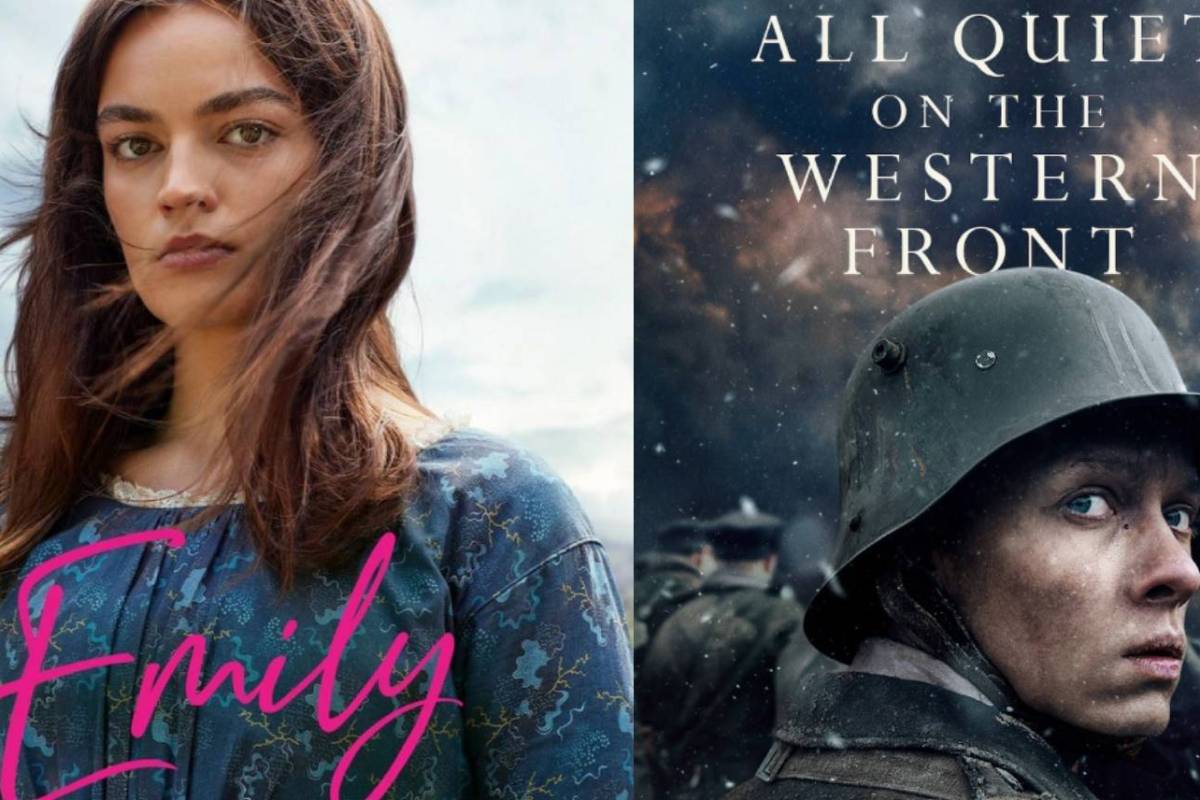
Well, I’m finally back. Since I last wrote a blog post, we’ve had a change in monarch, Prime Minister, chancellor, chancellor and chancellor. However, with the South West London Film Blog Awards back in 6 months, I have to start writing well now to be in contention to finally win (or at least re-gain my place in the top three). Anyhow, this week I wanted to go straight into variety, so am sharing my thoughts around a romantic period piece biopic and a German war epic. Let’s go.
Maybe in the smallest way, it is poetic that my return to writing this blog is focussing on a biopic on one of the most famous authors of all time. The film Emily tells of Emily Bronte’s life leading up to her writing of Wuthering Heights. This involves her growing up with a sense of isolation as an outcast. Unloved by her father and belittled by her sister, she has absolutely nothing beautiful in her life, until she finds herself in a damned relationship with the local vicar.
I am not a literary person, therefore knew very little of Wuthering Heights, nor much of Bronte’s story going into the film. Therefore, it goes without saying that a fan of the Bronte sisters will see more in this film and how it parallels her book than I ever will and may also get upset at any dramatization. Any biopic will never be fully accurate, whether it’s due to the ambiguity caused by time or purely to entertain an audience, and as an audience member I was entertained.
The film’s lead is portrayed wonderfully as devilish. A mask used for a Ouija-esque activity early on shows her as going very much against the will of God. The rebellious character who could be a villain of the time, yet today is looked at as someone to be liberated. She is vividly offset against Charlotte who is a disciplined teacher and lives how girls should live at the time. We see her as stuffy, while we connect with Emily. Her long lingering looks towards the camera feel as though you stare into her soul as she desires the most basic things humans can desire, to love and be loved. When she goes off the rails, it’s a feeling of sad isolation that makes you empathise with her. This is of course achieved by a fantastic actress.
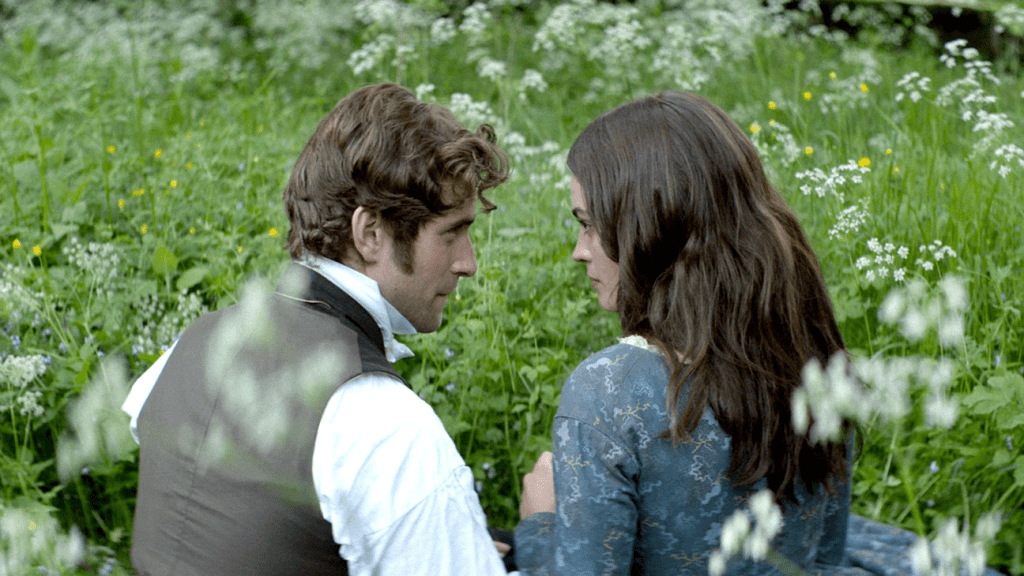
Emma Mackey (Or Maeve from Sex Education) really steps up to the plate in this role, able to show emotions in what is almost a second language with the time appropriate cadence. She really acts with her eyes and her motion, whether dancing or running, or looking straight forward it’s not the words she says, but also the words she doesn’t which are powerful. Against the brilliantly frustrating Alexandra Dowling who plays Charlotte, she works with her heart compared to Charlotte’s head leading to a much more emotional looking performance.
When the final credits role for the film, they only show six acting names, with such a small on screen ensemble reflecting the loneliness Emily feels. She only ever sees her dad, siblings and vicar. Everyone is on form here, making the 130 minute run time not feel over-bearing.
Tonally, the film strikes a dark realism, interjected with hope and romance. With the film regularly taking place in the rolling British hills, the lighting is realistic and grey at the best of times with a classic regular smattering of rain. While in no way a film to horrify, it certainly isn’t your easy Saturday 7PM Channel 4 family film either. Each darker scene reflects the intensity of a stellar cast and soundtrack, remaining very much focussed on the moment while in comparison, the happier scenes are handcam, spinning moments of delight and respite with joyous violins following Emily around in a dreamlike manner. This contrast allows for some smart mirroring between her high and low points throughout the film in a subtle way. No moment in such a long film feels wasted as each leads to both this beautiful novel and inevitable tragedy.
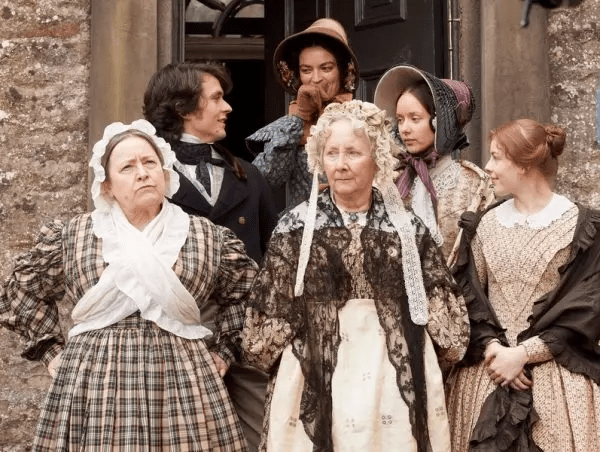
The realistic atmosphere is of course helped by a stellar production team. Each costume is divine as is every setting whether inside the period mansion which feels prison like in the mind of Bronte or out on the rolling hills where you feel the freedom. This alongside the beautiful score by Abel Korzeniowski just work wonders, albeit in maybe a heavy handed way. Frances O’Conner’s directorial debut feels occasionally experimental with a lot of ideas thrown at the wall in terms of techniques she wants to try which are exciting for the future. Yet thanks to a well ran film for the most part which is beautifully acted this never feels problematic.
Emily is a wonderfully acted tragedy, with Mackey and co all on top form to tell an engaging story about one of the all time great authors. Everything feels beautiful and refined, yet with an imperfect character looking to break free to great effect. [A]
Emily is available in cinemas now
It’s very rare that I watch a film and my main emotion is frustration. All Quiet on the Western Front is that movie for me. Technically well made, it just misses so much. For what could have been one of the year’s best films, it’s really frustrating. The picture is about a group of young German men who go to fight in the Great War, expecting a good time and to come back heroes. However, when they end up in the trenches, they realise it’s not the reality they have come to expect.
Based on the 1929 novel of the same name (and the 1930 film), we follow Paul (Felix Kammerer) through the span of eighteen months (except that 17 months and three weeks are a time jump). I was really excited about this film having watched the original earlier this year. I liked the ideas of the original, but it seemed rather cute and non-genuine, especially as it was all in American, unlike this German film. A grittier re-telling by those whose grandparents would’ve been the lead characters was an appealing idea. However, while this film was able to be a great war epic, it was clear the director hadn’t even opened the source material.
The point of the book is that it focuses on Paul. We see his mental strain as he grows from a naive child to an eventually indifferent adult. The toils of this great period of war affect him slowly and drastically. Sure you have the macro setting of a war, which is where this film excels, but the micro setting of a young vulnerable person used and spit out by a war machine is where the story really should go, but the film fails to do so. I think there are four key reasons for this. Firstly, the introduction of this film shows someone else dying on the trenches. Okay, we immediately know it’s rubbish out there so can’t get into Paul’s head of naïve optimism. When we first meet him, everything is immediately rushed with him and his friends. Before any story happens and we get to see this character in equilibrium, he’s in the trenches. There is no growing realisation, just a jolt which doesn’t have an impact. Another failing was the time jump. We move from the beginning to the end. Therefore, we don’t see the immediate impacts of what happens to him and his friends. We’re then at the end and he hasn’t really changed. He hasn’t had moments like in the original when he’s gone home. We lose the quiet moments to reflect. The pacing here is all over the place and so is the script.
The last issue that stops this being a great psychological film is the movie’s incessant need to go to the diplomats who are trying to end the war. They’re not important in Paul’s story. Sure their decisions make an impact on his life, but not in a way he is conscientious of. Instead, we see dithering and this whole war is pointless idea spread over a very long 2.5 hours. This means when we have our eventual butterfly scene it doesn’t have an impact. In fact, it’s not even a butterfly scene. There is another 30 minutes of random rubbish that ends the film which just goes against the book in a bad way.
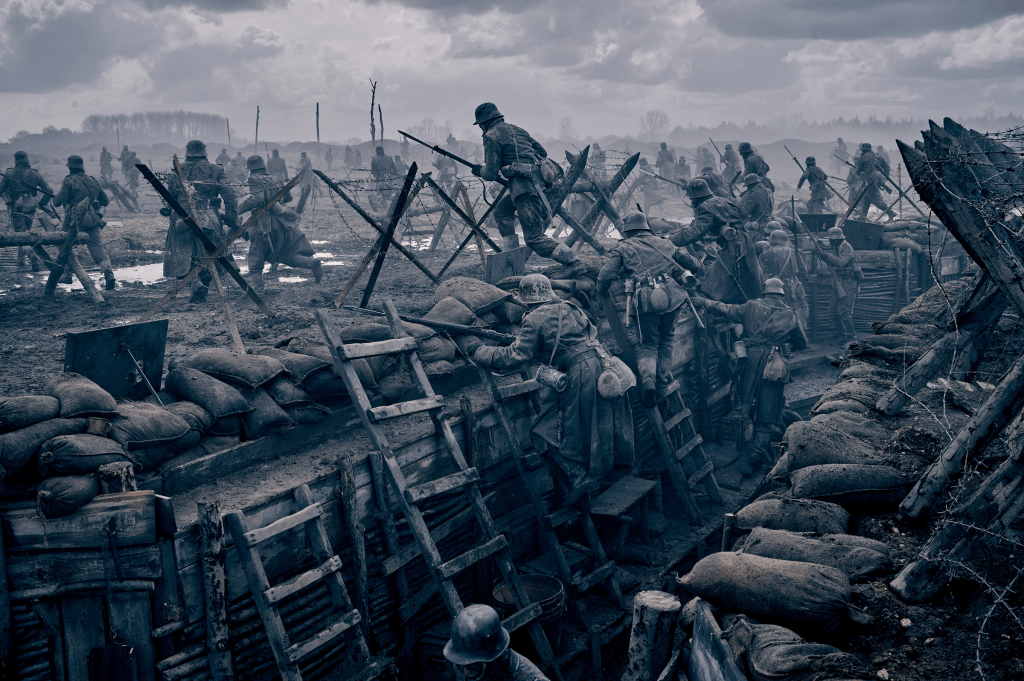
However, the film wasn’t all bad. As a war epic, it doesn’t hit Apocalypse Now, but is still good. The production design and use of props are fantastic. The battles feel tense and deadly, with some of the most shocking film war footage you’ll ever see. As the film goes on and we see the brutal reality of the war, this seems to be what the film wants to show and it does so well. Krammerer as Paul is also decent in his leading role, even though he looks very very similar to George Mackay in 1917, but that’s not his fault. On a technical side, the only real disappointment was the music, which was an over-bearing modern deep electric loud noise which came in now and then. It felt over the top and not fitting with 1918 front line.
While All Quiet thrives in its strong battle sequences which certainly have had care put into them, the clumsy writing and directing have absolutely failed to show what the film is all about, ultimately leading to an underwhelming and drawn out film. [C-]
All Quiet on the Western Front is in cinemas now and on Netflix on
 The Film Ramble