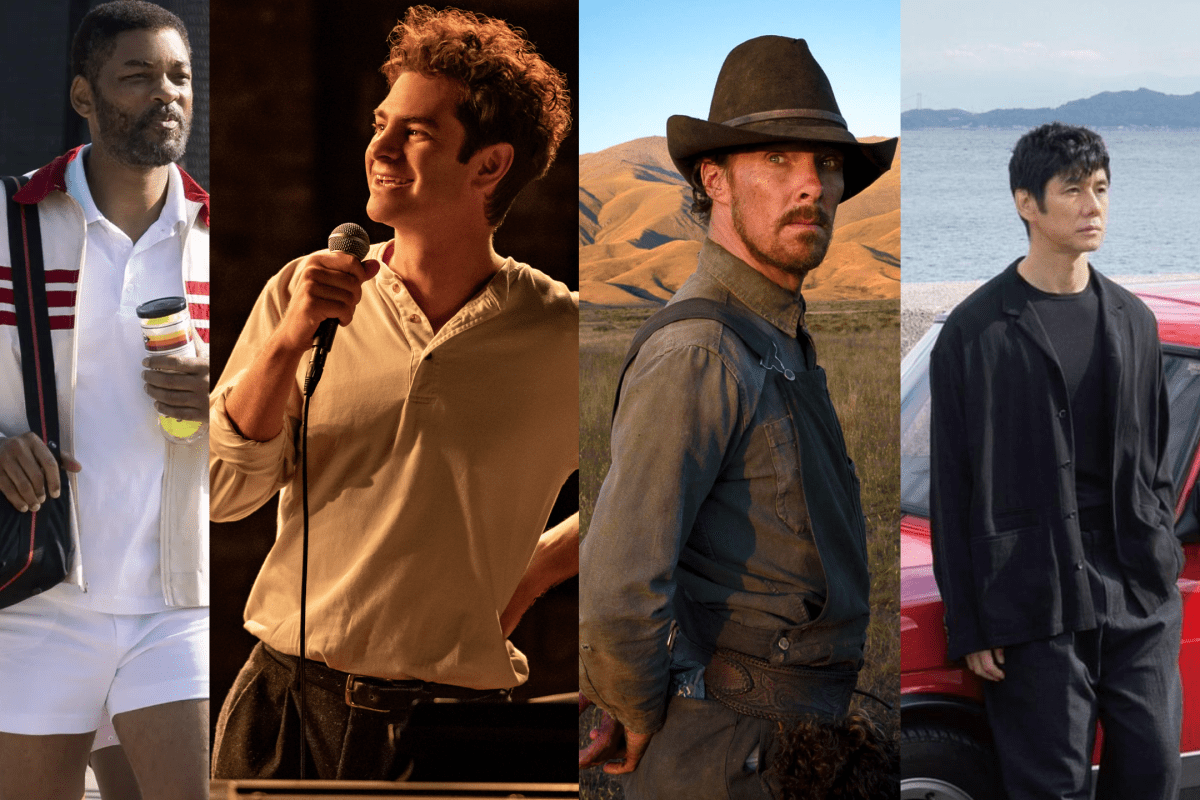
This is going to be a huge film dump because over the past few weeks, I’ve seen a number of films, however between that I was on holiday. It was a walking holiday up in Scotland. With anglo-scotlo relationships at an all time low, I had to be careful and drastically failed at that task when I met the lead blogger of EastWemyssFansOfMarvelFilms.com, the 14th biggest film blogger in Scotland, so a fairly a big deal. I didn’t mess up by telling them I wasn’t a fan of the second MCU Spiderman (first half good, second half boring crash bang), but by calling them “East Where-miss Fans Of Marvel Films.com”. Apparently it’s pronounced “East Whims Fans Of Marvel Films.com” and the one way to offend a scot is to mispronounce their place name. They swore vengeance on me and I hope they don’t find Surbiton Rebel Wilson Fan Club otherwise one third of my sinister six will be complete.
King Richard
So, on with the films and the biggest release on here is probably King Richard. The film is a biopic about Serena and Venus Williams growing up, but it instead focuses on their dad Richard who is pushing the sisters using his maverick methods. The first half of the film goes on an irritating loop of “Daddy, I’m not sure I can succeed”, “Yes you can I love you”. The second half of the film goes on a loop of “Richard, you’re holding these girls back”, “Oh no Im not, they’re going to be great” “Not with you Richard”, “Yes they are”. By reading the description you’ve basically watched the film and won’t be surprised with how it ends.
I’ve seen lots of buzz around Will Smith’s performance and I don’t get it. It’s not bad, it’s just fine and it feels like Will Smith playing a fairly generic Will Smith role. There isn’t any complexity to his character which isn’t superficial. We never fully explore the reasons he acts as he does, nor the impacts of his decisions on his daughters other than minor frustration. They are both producers on the film and it’s clear this has stifled any legitimate criticism of his methods. They’re controversial, but the film doesn’t treat them as such.
The script is corny, but the music, oh my gosh, they layer it on thick. It’s the most melo-dramatic irritating score which comes on as a scene is ending and another of Richard’s many identical arguments come to a head.
While the film isn’t especially any good, it’s likely to be a crowd pleaser. It’s a feel good by the numbers sports biopic where you know what is going to happen with that actor you like from Fresh Prince/Men in Black. The casual film watcher will enjoy it, but I’m about to discuss so many significantly better films than this one, so I’d suggest giving it a miss.
King Richard is in the cinema now
Tick, Tick… Boom!
Next up we have Tick, Tick… Boom!, the directoral debut from that guy in absolutely everything, Lin Manuel Miranda. So bear with me here. It’s a musical film based on an autobiographical musical of the same name which is about the construction of another musical, but adapted slightly to consider the creation of a third musical which is also a well known film. Following?
TTB is an autobiographical film about Johnathan Larson, the creator of Rent. The film focuses on his creation of his debut musicial, the futuristic Superbia. Larson is living a poor but happy life, with not much but his passion and his girlfriend. He’s at his 30th birthday and suffering an early mid-life crisis. His girlfriend wants him to move away from the city with her and his best friend is suggesting Larson gets a lucrative job and gives up writing musicals. In the meantime he is working on a preview of Superbia However, with weeks to go before he previews his work he’s suffering from writers block and not able to work out the missing song which is required. While this is happening, the AIDS epidemic is fiercely roaring in the background, no doubt influencing his future hit musical Rent.
I really liked Tick Tick Boom for several reasons. Firstly, the film had strong themes. These were about commitment and love of a craft, no doubt why Miranda took the project on. It’s also about the finiteness of time, both with the play and the lives and relationships around Larson. The name of the film shows how panicked it all is and how everything feels like it’s ending or changing apart from him. This becomes even more poignant when considering Larson’s untimely death only a few years after this musical was made.
Another name for the best actor award season lists will be Andrew Garfield, and it will be well deserved. A year ago, he couldn’t sing at all, however now he looks like he’s been doing it all his life. He gives a performance full of Larson’s energy and the subtle differences between his vulnerable flashbacks and his stage persona when performing are really clear to see and provide a wonderful finesse. There are sad moments in the film, and he doesn’t milk them but treats them with respect and a good level of emotion.
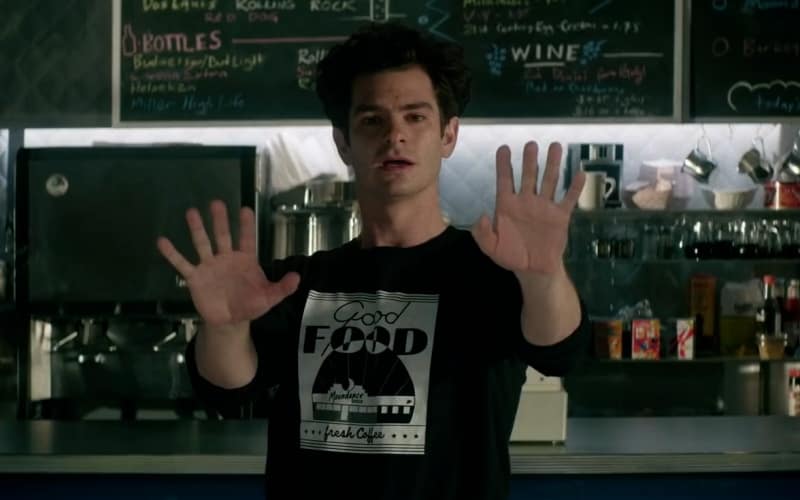
The style of the movie is odd. TTB originally was a one man show (with a couple of backing singers) of monologuing with musical numbers. Director Lin Manuel Miranda sticks with this, but interjects it with flashbacks so it can feel a bit jarring. While it took me the first hour to really settle with this, when I was in, the second hour was great. There are some real earworms as well.
TTB is a great movie with a real beat and energy, mainly thanks to Andrew Garfield’s performance. It’s available on Netflix now and is worth watching as it’s one of the best musical films of the year.
Tick, Tick… Boom! Is available on Netflix now
The Power of the Dog
Let’s go for a hat trick of lead male performances likely to be nominated for awards, by also talking about The Power of the Dog, the new film by Jane Campion (The Piano). Based on the book of the same name, the film is a slow burner set in 1920’s America, a time of cowboys. Leader of a cowboy group Phil (Benedict Cumberbatch) has rolled into town with his gang including his brother George (Jesse Plemons). George falls in love with and marries the owner of the local ranch much to Phil’s anger. Phil then makes it his mission to psychologically terrorise his sister-in-law and her son who he later gains other strong feelings for.
This film is a really weird film for Netflix to own. It’s such a slow burner, in a similar way to Roma. It goes at such a pace that to watch it at home would be tough, however it is rewarding if you’re willing to focus. While some sections felt unnecessarily dragged out, Campion manages to keep a real tension going throughout. Cumberbatch’s toxic lead brings a hugely intimidating presence, so much so that you feel nervous not only when he’s on the screen, but also when he’s not there. This is also helped by a fantastic score by Jonny Greenwood which also keeps everyone on the edge of their seats. It really is a mood piece and yet there is an interesting story there, with lots of small threads and seemingly throw away scenes which all come back for an ending which will have you thinking for days.
The film also looks beautiful. A bunch of drone shots and clever camera angles show off the scenery in a way which makes it seem rich. There are endless possibilities, but the small town also feels like an isolating prison for our victims of Phil’s wrath. It truly is beautiful to look at and if you can see it on a big screen, then make sure to do so.

At the time, I was totally on board with the film. It’s not perfect but it does a lot right. It was a film I respected as a good example of the craft as opposed to one I loved. However, it has also stuck in my head in the days since. It’s not a film for every one, but those film fans who are ready to invest in a film which takes its time and does masterful show-don’t-tell film making will be in for a treat.
The Power of the Dog is out in cinemas for a limited time now and on Netflix on December 1st.
Drive My Car
The last film I want to discuss as my train will soon reach it’s destination is Drive My Car. The Japanese entry for best international film at the upcoming Oscars comes in at a whopping 179 minutes long and when a film is that long you’ll love it or hate it. I’m in the former category as it kept me on board throughout the whole thing.
The film has a 40 minute prologue, so get ready for me to spoil that. There is still 140 minutes after to watch which I won’t spoil. Yusuke is a play director in Japan and is happily married to wife Oto who is a screen writer for TV. She comes up with most of her best ideas at the most intimate of times and gets her husband to say them back to her the next morning. One day when Yusuke is to go for an audition he finds Oto cheating with an actor, Koji and doesn’t confront her. There are many complex reasons which are discussed later. One day, a week or so later, Oto says they should talk when he’s home from work. Yusuke delays getting home and finds his wife dead. The rest of the film focuses on him mourning as he directs a play which is thematically similar to his life. It’s somewhat dramatic as actor is cast into a lead role which makes the whole thing awkward. Meanwhile, director is also forming a friendship with his new chauffer driver and as they grow to trust each other more they can begin to deal with their trauma. It’s like Green Book but with self-respect I guess.
There isn’t much action in this film as it’s a rather understated piece, but the script is absolutely phenomenal. Based on a short story, it’s been fleshed out incredibly. No single scene seems wasted and each line is said with a purpose. I was worried I’d be bored like in I’m thinking of Ending Things, but because of what we’ve seen each line feels like it carries a weight, regardless of how insignificant it seems. It’s also helped by a stellar cast who all pull their weight in this film about mourning and self-forgiveness. The construction of the film makes it release lines from the play at the relevant point in the story to get you into Yusuke’s mind.

Drive My Car is a well made, beautifully understated piece. Not much action happens as it’s a much more meditative emotional journey. With such tight writing and direction, it’s a pleasure to watch and one of the best of the year.

 The Film Ramble