Friday night was my first return to the cinema since the second national lockdown. A rather exciting event, I decided to watch a double bill of films. The first one (which I shall discuss another day) was me sat alone. I sat there questioning whether this was better than with others. The second was with others and my goodness the question was answered. I’d stopped for a tea break midway through the two films. A cup on English breakfast tea and a brownie in the Curzon Victoria cafe, a fairly upmarket cinema. I’m no snob, but there is some usually observed etiquette in the more art house places. However, when this couple/father & daughter (I genuinely couldn’t tell which) came in excitedly, I gave them the benefit of the doubt for I to was excited. However, the alarm bells should have been ringing for these were the worst types of cinema goers. They were nacholites.
By this I mean they bought nachos and brought them in with them (The correct use of bought and brought for those who aren’t sure). The smelliest, noisiest food in existence. Who needs a construction site when you’re three seats away from these individuals. Strike one. Then they also bought a hot dog. Oh my goodness, you’re watching a movie. You can go 2 hours without stuffing your face with this cheap junk. Strike 2 (The only acceptable food is quiet food which doesn’t smell). Then guess what, they also had popcorn. Hey guys, don’t have your phone on. The sound is distracting. Sure, Mr Cinema. We’ll just spend 30 minutes crunching this loud smelly vile cheap shit instead. STRIIIIIIKKKEEE THREE. But are they out? No. There’s more. He talks to her throughout the film. Why? WE CAN ALL HEAR YOU! Yes, it is respite from your nachos but its noise, it’s distracting, it takes away from the immersion. Maybe you’re trying to impress a new girl/ improve your relationship with your daughter, but frankly… not the time. Strike 4. It clearly didn’t work, because she was bored of the film and went on her phone before the end. Of course she did…. Strike 5. Cinema, it’s great to be back.
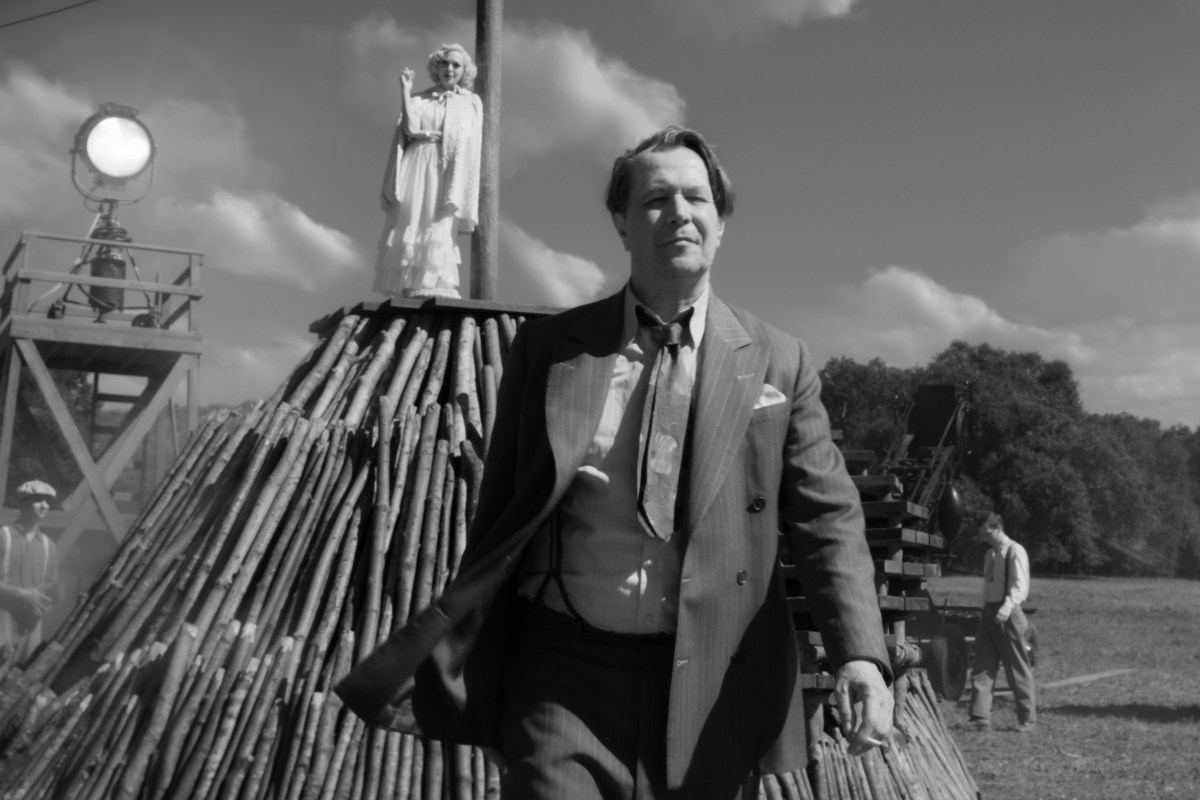
I actually saw a film as well. Mank is David Fincher’s newest film, written by his father about how Herman Mackiewicz, or Mank (Gary Oldman) wrote Citizen Kane. It’s a dramatised re-enactment with questionable historical accuracy, but that’s not important. When we meet Mank, he’s an alcoholic whose recently been involved in a road accident, so needs a scribe to write for him. His health is failing him, but his brain is doing well. A famous playwrite, he decides to put together a film based on his life events, which obviously turns out to be Citizen Kane, a film about a media mogul who goes for power. These events are shown through flashbacks.
First things first, if you haven’t seen Citizen Kane, this film will make little sense. If you don’t love Citizen Kane, you probably won’t be deeply passionate about the film. This is what Mank relies upon. Personally, I’m not huge on the film. I think its okay and does some things well, but I won’t defend it as the greatest thing ever. Therefore, I came out of it, not particularly invested. Like I say, if you haven’t seen Citizen Kane, there is no need to see this one.
The story was well put together, although it took me most of the film to work out who was who. The Kane character played by Charles Dance had very little screen time in the flashbacks. It was really tough to get a big picture understanding. Instead, you end up with the smug Mank drinking his way around the place. While the start of the film feels a bit dissonant and rocky, soon enough it flows into a well made narrative. The flashbacks made an interesting enough story, which when taken on its own holds up, although as I said, Kane fans will have been salivating over it. The dialogue is okay, however in the present time, it gets rather repetitive and isn’t on the same level as other Fincher movies like The Social Network. Thematically the film is relevant to today, discussing media influences into politics. No doubt that some of Mank would’ve tweeted about the fake news conspiracies if he had the technology.
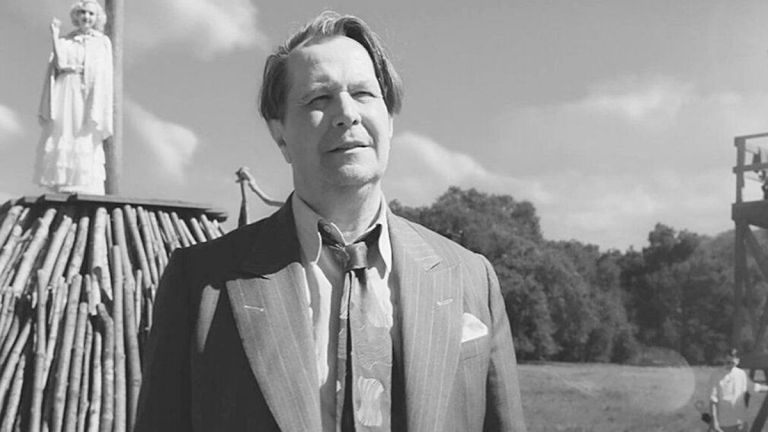
The film is shot in black and white, and not digitally. There are imperfections within the recording to mirror the look and feel of the 1930s. However, these probably won’t be appreciated at home on Netflix. The style choice felt more for substance than to enhance the story in any way. It certainly showed this film to be the love letter to the era that it was. In fact, there was one scene where in bed, Mank drops something which was a parody of the snow globe. The soundtrack, while initially I worried a bit too overpowering, was reasonably made, a jazz style piece which wouldn’t have been out of place in the 1930s.
The acting was fine as well. I wasn’t blown away by the acting of Orson Wells, however Mank and the characters throughout the flashbacks were well rounded believable performances. I think my main problem which I have regularly in Fincher pieces was that I wasn’t able to emotionally connect with what was going on with our characters. Mank just wasn’t that likable, leading to a struggle unless you’re really into Citizen Kane.
Summary
Mank is a well made, competent film by a seasoned professional. A truly romantic tribute to one of the most influential films ever. If you love Citizen Kane, you’ll love the movie. However, if you’re not as in to it, this film will be more of a rosebud than in full bloom. [Grade: B-]
Mank is out on Netflix and in some cinemas now
 The Film Ramble
2 thoughts on “Review: Mank”