A couple of years ago, I decided to go and watch Greta Gerwig’s debut film Ladybird. I wasn’t sure why. I had only seen the poster, but the film never felt like one I’d usually see. A teenage girl from a religiously devout home in Sacramento coming of age just wasn’t a film I would ever be interested in. Yet, Ladybird had a real charm to it which made it one of my favourite films that year against all odds (and changed my answer of favourite type of film to good films). In the same way, some sad rom-com focusing on a couple’s love life didn’t appeal to me on paper either. However, Marriage Story is so much more than that.
While your dad will be sat in one corner of the room with his portable device watching Netflix and Scorsese’s latest masterpiece, your mother is likely to be sat in the other corner on her portable device watching Noah Baumbach’s latest work. The opening few minutes are incredibly charming. Charlie (Adam Driver) lists everything he loves about his wife Nicole, from how shameless she is to how she’s a bit messy. Nicole (Scarlett Johansson) then says everything she loves about Charlie, from how determined he is, to how he cries in films. Importantly, both are very competitive. Everything all seems happy and rosy, then it turns out these are just things they wrote for divorce counselling… That’s right. Marriage Story is all about a divorce.
The divorce happens at a crossroad for our leads. Charlie, an obsessive director, has just been given the change to take his theatre play to Broadway (New York). Meanwhile, Nicole has been given a chance to star in a TV show in Los Angeles and has taken their child and moved out there with her mother. As an Englishman, I believe these places are meant to be far apart. Having worked together in theatre for years, there is a clear under-lying resentment between these two, however they agree to sort things out amicably without lawyers. But things take a turn when Nicole goes to a no-nonsense lawyer (brilliantly acted by Laura Dern) recommended by her co-worker who convinces her to go for more. These actions start to remove Nicole from a pedestal as she had no need to do this and both people seemed reasonable. However, as the film goes on, both characters are shown to be anything but perfect. This building of blemished individuals keeps the story grounded and constantly add depth. Once the lawyers get involved, the relationship really begins to deteriorate. Their secrets are revealed at the right time to shock the audience. Both have to make decisions about how much they want to fight and at what cost, especially Charlie who has to deal with work on the other side of the country and balancing his relationship with his son with the divorce. There is a potent point when it becomes clear his recent absent behaviour is because his son “has to know I (Charlie) fought for him.”
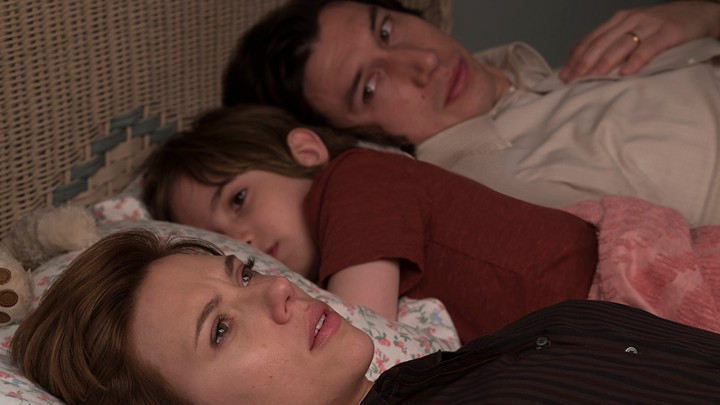
Their son Henry (Azhy Robertson) is the focus point of this battle. All Charlie and Nicole both want is to have custody of him. It’s all sad as it messes with all of their dynamics and shows a messy divorce leading to wider suffering. Everything he says feels like a kick for one parent as he is unknowingly choosing sides. However, in amongst all this pain and suffering they put themselves through, there is still a chemistry between the two characters, and it leaves you asking whether they both have feelings for each other and second guessing yourself about whether they should divorce.

In amongst this heavy material are genuinely funny moments which will make you chuckle. There is a sequence around Nicole’s sister having to serve Charlie with a divorce in which she awkwardly bumbles about. The extent which Charlie goes to for Henry also leads to genuinely funny moments. As well as giving us a break from some heavy material, these parts don’t feel out of place as they show a real human side, what these people are like away from the battles. This is where the film thrives. It really projects humanity in the darkest of times.
Both Johansson and Driver put in great performances and work well together. It’s not just the louder moments, but the quieter moments to. When Nicole first meets her lawyer, she doesn’t want to say many words about how she’s feeling, but her body language and expression say so much more. She is pained and you can tell this before she even says it. She brings in a conflicted performance with a real under-lying resentment However, it is Driver who really steals the show. The film is primarily about his character and his range of emotions is on full show here. He switches between overly charismatic and blunt well. From funny to angry to devastated, he goes on the whole spectrum of emotion and you totally buy his performance. Forget De Niro, forget Phoenix, this is my favourite male acting performance of the year so far.

Stylistically, this doesn’t feel like a Netflix big budget film. It feels very low budget and independent, with a lack of effects, big set pieces and soundtrack. Undoubtedly, the cost of the cast would’ve been great. Even so, this lower spend is a welcome change of pace from a company who have really improved on their usual shoddy standard this year.
The film does feel like it repeats in places as we go through this vicious cycle. But each time is slightly more powerful, so you don’t roll eyes. However, at 2 hours and 17 minutes, the film does drag a bit in the last 20 minutes, with many scenes not adding too much by this point. However, this was my only complaint and the first hour and forty-five made up for this.
Summary:
A simple premise is brilliantly executed in this film which left me both crying and laughing. In amongst some deep sad moments we really see an abundance of humanity blossom, mainly thanks to two incredible performances from Johansson and Driver. [Grade: A]
A must watch film, Marriage Story comes out on Netflix on Friday 6th December. While I’d recommend watching it when you can, I wouldn’t suggest it particularly vital to see it at a cinema.
 The Film Ramble
2 thoughts on “Review: Marriage Story”