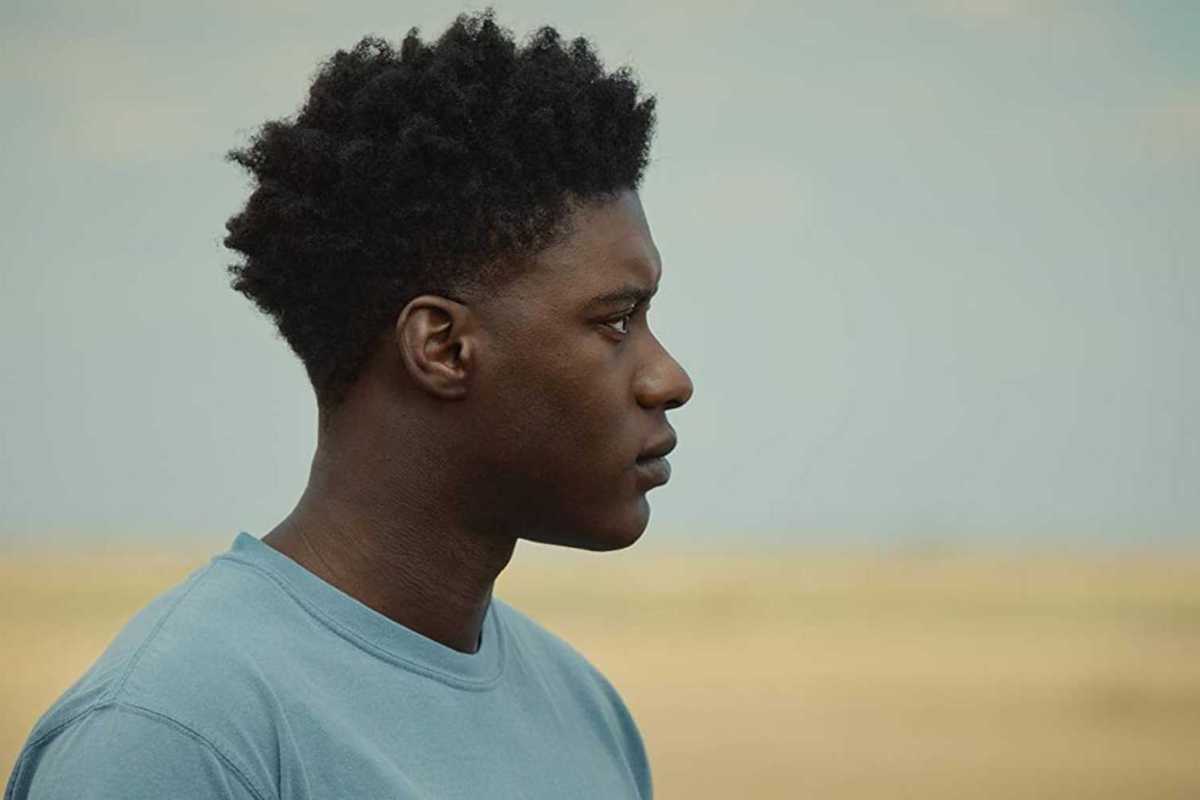
When I watch a film, the one thing I look for more than anything else is some form of passion, a level of care from within that says I will tell this story and you will listen. Such a thing is difficult to describe and can come in many forms, but whatever this enigmatic quality is, Shola Amoo’s The Last Tree has it in buckets.
We first come across the young Wolfpack, a nickname for Femi (At this point, Tai Golding) and his three friends. A young quiet black boy living in white rural Lincolnshire, he is looked after by “Nan” Mary (Denise Black) and is happy wrestling with his friends and playing football. Despite his love of shouting like wolves, Femi is very quiet, yet we start rooting for him very quickly. He is happy and pure. With no dialogue he acts with his face and is assisted by bright beautiful cinematography and lighting. Everything is in order as it should be.
Then things start to get rocky when Femi’s mother (Gbemisola Ikumelo) comes along. Having been unable to look after him, she says she wants to take him back to London, despite young Femi wanting to stay with Nan. We then see Femi have to adapt to his new surroundings. His mother treats him a lot differently to Nan, beating him for discipline and showing little outward affection. Some of the examples used in the film are a bit too obvious, yet allow for simple powerful imagery nonetheless. He also has to deal with school which is a lot more chaotic.
The second part of the film sees a time jump to when Femi is older (played now by Sam Adewumni). He is much more confident than before, but has learnt to put up an ice cold exterior. With no father in his life, he needs some guidance and affection which isn’t given to him by his mother. He also looks to learn about his identity as he has clearly lived two different lives and doesn’t know anything about his father. He gets involved in the wrong crowds and really needs healing.
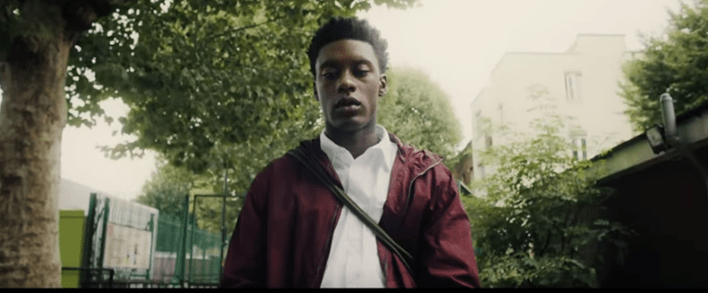
Adewumni puts in a powerful debut performance as older Femi. Even though he doesn’t speak his pain, we can feel every thought going through his head. Amoo really helps tread the line between Femi needing help and being dislikable for his actions, leading to an emotional climax which will pull at your heart strings.
While the story may be one you feel like you’ve seen before, few deliver it in such a polished way. The use of lighting is phenomenal, from the sunny planes of Lincolnshire to the grey and musty look of London. The sets are used to great affect as well. The big blocks of London flats are made to look intimidating and slightly prison like as Femi can only watch the other boys play football over the walls. The use of symmetry to show contrast both within shots and across the movie make this visually satisfying.

It’s not just the visuals which are a treat either. Audiably, the movie is stunning. With an understated woodwind score and powerful harmonies increasing to an emotional crescendo at the right time. Sound editing is also done brilliantly. The sound of Femi breathing is amplified, helping further emotionally charge film. We also hear what he hears and this is done to brilliant effect at a certain point in the film.
The pacing is also fantastic. The film knows when to go through the action and when to slow down to consider the importance and emotional strain of the moment.
Summary
Billed as the British Moonlight, The Last Tree is almost certainly not going to get the same recognition. What it does provide is a brilliantly made, understated film with brilliant cinematography and sound editing. [Grade: A]
 The Film Ramble
One thought on “Review: The Last Tree”